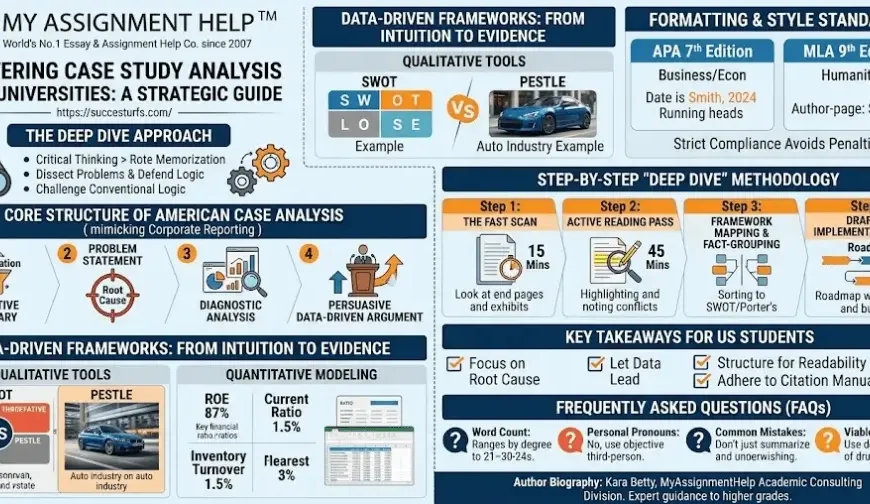

Business leaders used to rely heavily on intuition and past experiences to guide their companies. This approach often worked when markets moved slowly and competition remained local. Now, relying solely on gut feelings is a massive operational risk. Companies generate and collect massive amounts of information every single second.
This guide explores how modern businesses leverage analytics, big data, and business intelligence to drive their most critical choices. We will examine how shifting from intuition to empirical evidence transforms customer relationships and operational efficiency. Furthermore, we will explore how quantitative insights guide massive structural decisions, such as international expansion.
By the time you finish reading, you will understand how to harness the information your company already generates. You will have a clear framework to build a more analytical, objective, and ultimately profitable enterprise.
Moving From Intuition to Intelligence
Every business generates data, whether they realize it or not. Every website visit, customer service call, and inventory order creates a digital footprint. The difference between average companies and market leaders lies in how they harvest and interpret these footprints.
The Problem with Gut Feelings
Human intuition is deeply flawed. Cognitive biases naturally cloud our judgment and push us toward decisions that feel safe rather than decisions that are optimal. A manager might launch a new product because they personally like the concept, ignoring clear signals that the target market lacks interest.
When you base your strategy on subjective opinions, you cannot accurately measure success or failure. You cannot pinpoint exactly why a marketing campaign failed or why a specific sales channel underperformed. Shifting to an objective, analytical approach removes these dangerous blind spots. It forces leadership teams to confront reality, even when the numbers contradict their personal beliefs.
The Power of Big Data Analytics
Big data analytics involves examining massive, complex datasets to uncover hidden patterns and market trends. This technology allows companies to process millions of transactions in real time. It shifts business strategy from a reactive posture to a proactive one.
Instead of waiting for quarterly sales reports to realize a product is failing, analysts can track engagement metrics daily. They can adjust pricing, tweak marketing copy, and optimize ad spend before small issues become massive financial losses. This level of agility is only possible when you build your foundation on empirical evidence.
You Should Also Read : TechAiTech
Key Areas Where Analytics Drives Strategy
Data proves its value by touching every single department within an organization. When you democratize access to business intelligence, you empower your entire team to make smarter, faster choices.
Understanding Customer Behavior
You cannot serve your audience effectively if you do not understand what they truly want. Customer analytics removes the guesswork from product development and marketing. By tracking user behavior across your digital properties, you build highly accurate buyer personas.
You can see exactly where users drop off during the checkout process. You can identify which email subject lines generate the highest open rates. This information allows you to personalize the user experience at scale. When customers feel understood, they remain loyal to your brand, which significantly increases their lifetime value.
Optimizing Operational Efficiency
Waste destroys profit margins. Analyzing your internal processes helps you identify bottlenecks and inefficiencies that drain resources. Supply chain managers use predictive analytics to forecast demand and optimize inventory levels.
If the numbers show that a specific supplier consistently delivers late, you can source alternative vendors before stockouts occur. Human resources departments use performance metrics to identify which training programs yield the highest productivity gains. Every operational tweak driven by evidence directly improves your bottom line.
Financial Forecasting and Risk Management
Financial stability requires accurate forecasting. Historical revenue figures combined with market trend analysis allow financial officers to build highly accurate budget projections. They can stress-test different economic scenarios to see how the company would perform during a market downturn.
This analytical approach extends to risk management. Credit card companies use machine learning algorithms to detect fraudulent transactions in milliseconds. E-commerce brands use risk scoring models to identify high-risk orders before they ship. Mitigating risk through quantitative analysis protects your capital and ensures long-term sustainability.
Using Evidence to Guide Global Expansion
Expanding a business internationally requires massive capital investment and carries significant operational risk. You cannot choose a new market based on a hunch. Global expansion demands rigorous quantitative analysis and careful structural planning.
Identifying New Market Opportunities
Before you launch in a new country, you must validate demand. Web traffic analytics reveal where your international visitors originate. If you notice a massive spike in traffic from a specific region, that data serves as a strong indicator of market interest.
You must also analyze local economic indicators, competitor pricing structures, and consumer spending habits. This quantitative research helps you calculate your total addressable market and estimate potential profit margins. If the numbers align, you can confidently commit resources to that region.
The Strategic Move: Register a trading company in Hong Kong
When expanding into Asian markets, structural choices dictate your financial success. Data consistently points forward-thinking entrepreneurs toward highly efficient, business-friendly jurisdictions. One of the most mathematically sound decisions you can make is to Register a trading company in Hong Kong.
Quantitative analysis of global tax codes and operational costs reveals why this jurisdiction remains a top choice. Setting up your entity there provides immediate access to the booming Asia-Pacific consumer base. The numbers show that businesses operating from this strategic hub benefit from drastically reduced logistical costs when sourcing products from mainland China.
Leveraging Territorial Tax Benefits
The primary data point that drives companies to this specific region is its territorial tax system. Financial modeling clearly demonstrates the massive advantages of this structure. Corporate tax is only levied on profits derived from trades or businesses carried on within the territory.
If your analytics show that your primary customer base and suppliers are located offshore, you can legally achieve a 0% corporate tax rate on those specific profits. Even local profits face a highly favorable two-tiered tax rate. When you eliminate sales tax, capital gains tax, and withholding tax on dividends from your financial projections, your retained earnings skyrocket. This allows you to reinvest heavily into further technological innovation.
Building a Data-Driven Culture
Buying expensive software does not automatically transform your company. You must build a culture that values objective evidence over hierarchical opinions.
Investing in the Right Tools
Start by auditing your current technology stack. You need tools that collect, clean, and visualize information accurately. Implement a robust Customer Relationship Management (CRM) system to track sales interactions. Use advanced web analytics platforms to monitor your digital properties.
Most importantly, invest in business intelligence dashboards that consolidate information from multiple sources. Your leadership team needs a single source of truth. When executives can view real-time performance metrics on clear, visual dashboards, they make faster, more confident decisions.
Training Your Team
Data is useless if your employees do not know how to interpret it. Data literacy must become a core competency across your entire organization. You do not need to turn every employee into a data scientist, but they must understand basic analytical concepts.
Provide training on how to read reports, identify trends, and question anomalies. Encourage a culture of experimentation. When an employee proposes a new initiative, ask them to outline the metrics they will use to measure its success. When you tie performance evaluations to objective outcomes rather than subjective effort, your entire workforce aligns with your strategic goals.
The Future of Business Intelligence
The volume of information generated globally continues to double at a staggering rate. Artificial intelligence and machine learning now automate complex analytical tasks, making advanced business intelligence accessible to companies of all sizes.
Predictive models no longer just forecast the future; prescriptive analytics now recommend the exact actions you should take to achieve a specific outcome. As these technologies mature, the gap between data-driven companies and those relying on intuition will widen permanently. To remain competitive, you must embrace this transformation immediately.
Conclusion
The role of data in decision making is absolute. It is the critical foundation that supports sustainable growth, operational efficiency, and exceptional customer experiences. By moving away from subjective intuition and embracing empirical evidence, you eliminate dangerous blind spots from your strategy.
Whether you are optimizing your marketing spend, refining your supply chain, or analyzing the financial benefits of international structuring, numbers provide clarity. Use the insights hidden within your organization to guide your next strategic move. When you let objective intelligence drive your choices, you position your business for resilient, long-term success in an increasingly complex global market.
Frequently Asked Questions (FAQs)
How does data analytics directly improve business ROI?
Analytics improves return on investment (ROI) by identifying exactly which marketing channels, products, and operational processes generate the highest yields. It allows leadership to eliminate wasteful spending on underperforming initiatives and reallocate that capital toward proven, high-converting strategies, drastically improving overall profitability.
What are the biggest challenges in building a data-driven culture?
The biggest challenges include breaking down information silos between different departments, ensuring data accuracy, and overcoming employee resistance. Many teams are accustomed to making decisions based on experience and may feel threatened by objective metrics. Overcoming this requires comprehensive training and strong leadership that champions evidence-based strategy.
How do privacy regulations impact customer analytics?
Privacy regulations, such as GDPR and CCPA, require businesses to be transparent about what information they collect and how they use it. Companies must obtain explicit consent from users and ensure their storage systems are highly secure. While this adds a layer of compliance, it ultimately builds stronger trust between the brand and the consumer.
Why is data analysis critical before expanding a business internationally?
Expanding without quantitative research is a massive financial risk. Analysis validates product demand, evaluates local competition, and projects realistic profit margins. It ensures you commit resources to a region only when empirical evidence indicates a high probability of success.
How do the numbers support the decision to Register a trading company in Hong Kong?
Financial modeling shows that Hong Kong’s territorial tax system can legally reduce your corporate tax burden on offshore profits to zero. Furthermore, logistical data proves that its strategic location provides the fastest, most cost-effective shipping routes to mainland China and the broader Asia-Pacific region, maximizing global profit margins.


 By
By